"As of 2023, single-person households make up over 35% of South Korea. And yet, even though we're a society of people living alone, Korea is still bound by an outdated family system. Schools, hospitals, banks — even funeral homes — turn you away without a family member to vouch for you. A body without family can't even be properly received. This made me wonder: 'If I die alone, who will take care of what's left of me?' After my father's funeral, I came to a realization: 'If the law doesn't change by the time it's my turn, I want to rent a fake family if that's what it takes to die with dignity. I refuse to die alone and unnoticed.' Look around, and you'll see people living alone everywhere. For those of us reaching middle age, the constant questions are 'who will care for me' and 'how do I avoid dying alone' — and yet none of us want to move into shared housing. So we keep dragging our aging bodies to work, grinding away at earning money, all so that one day we might afford a hotel-like senior residence where we can end our lives in comfort.
Is family really the solution to society's problems?
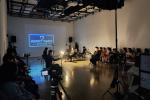
This question led me to look at 'family' as both the site where problems begin and the place where they get covered up. In that sense, the W-shaped stage represents family as a blind spot. Pure white, meant to embody family as an absolute, untouchable value — this stage also swallows the violence, discrimination, loneliness, and pain that exist within families, forming a solid wall that keeps outside help from reaching family problems. The walls are thick enough to keep what happens inside from getting out, and high enough to block outside eyes from looking in. It feels like nothing will ever change, like something both real and yet a reality we'd rather believe is fake. Under the unspoken rule that no one is allowed to tarnish the image of the 'happy family,' I noticed people who need help but that no one helps — people who are 'present yet invisible.' They were closer to me than I'd realized, and I too had stayed silent about the suffering behind that wall. This piece is the alternative I, as an artist, imagined out of that powerless despair.
What if there really were a company that rented out fake families?
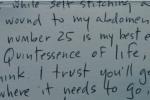
Even now, role-substitute companies quietly provide services like wedding guest rentals, funeral mourner rentals, and rent-a-lover services. In a future where single-person households are only projected to grow, if this kind of advanced 'human rental' service moved out of the shadows and into the light to meet people's needs, what kind of family would people actually want? The personal stories featured in the actual performance are real submissions collected from general audience members through the Perfect Family Project between 2019 and 2023. Building on these 'fake family' stories, I wanted to add in the stories of people who feel abandoned by society and family, who can't speak about their pain, and who wish they could simply disappear — and through all of that, ask: what does 'happy family' actually mean?"
(First translation)